Plushie Dreadfuls & Stereotypes
Let’s talk about “stereotypes” because I often see people hating on our Plushie Dreadfuls designs as a function of this idea.
If you want people to instantly recognize what a character is about, especially in something small and simple, you have to lean on clichés. That is just how it works. A stereotype and a convention are the same thing; we only call it a “stereotype” when we do not like it.
But the reason we can look at something and immediately go, “Oh, that is the nerdy one” or “That is the tough guy,” is because we have seen that visual shorthand a million times before. You cannot have instant recognition without repetition, and repetition is exactly what makes something feel like a stereotype.
So yeah, the thing that makes a character “work” quickly is the exact same thing people complain about. That is not an excuse. It is just the math of working with limited space; with limited materials; with limited time.
Think about a plush toy. It has got one shape, maybe a few colors, and one accessory if you are lucky. It has zero room for nuance. A movie has more wiggle room than a toy, and a novel has more than a movie. But when your whole character has to fit in a single glance, you do not get to be subtle. Using one obvious trait to represent a whole personality is not being lazy. It is literally your only play.
This goes for artists designing plushies from their own experience or working with a community through a crowd design process, too. They are stuck with the same constraints.
A plushie meant to represent a community cannot avoid this structural problem. It will never capture every person’s experience or resonate with everyone. That is not the artist being careless; it is the reality of working in a tiny, compressed format. It’s a function of the limitations of the medium.
Still, if an artist wants to make something that expresses an idea or a piece of their truth, they should be able to do that without facing violent or dehumanizing backlash.
Criticism is fair. You do not have to like the result. You do not have to agree with the choices. But you do not have to tear someone (or a community of someones) down, either.
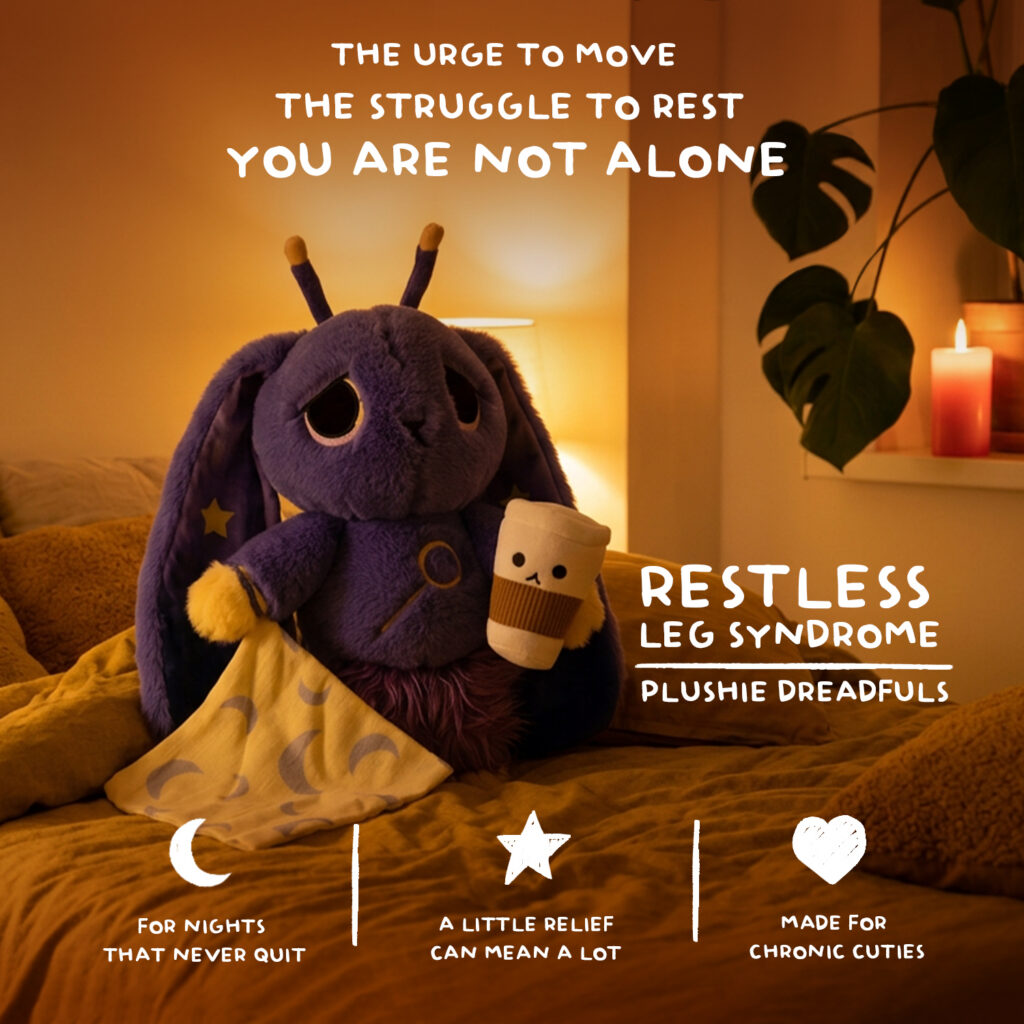
I know of one plushie brand that tackles this problem by designing “generic” (relative to visible symptom representation) plushies and then giving them lore that says “I have (fill in the blank with whatever mental or physical health issue).” And that is certainly one way to go about it.
We’ve also discussed this route and floated it within our community. But the idea is rejected by the community because it turns out that many people LIKE to see artistic representation of their struggles. They LIKE the idea that a thing that makes them uncomfortable might make others uncomfortable.
There’s a quote I see floating around social media spaces quite often:
“Art should comfort the disturbed and disturb the comfortable.” (Cesar A. Cruz)
And this notion is very much at the core of my Alice games. And – prepare for big shocker here – the same concept is carried over into my plushie company! AND all of that goes a long way to explain why fans of my games also tend to be fans of my plushies! 
Now, I say this as someone who has seen fan art of my Alice character shipped with Dr. Bumby – and found the entire presentation to be disturbing and distasteful. But I don’t go on social media and repost that art while telling the world how much I hate it. I recognize that there are people in the world who “need” that art for some reason or other. And I say: Let them have it.
If you don’t like our representation of PTSD then keep scrolling. If you see a social media post where someone is celebrating their ADHD or Autism Bun, maybe don’t drop negativity into the comments?
As always: Live and let live.
And if you want to know more about the symbols and design choices contained on our plushies? Just head to the site and check out the description. There’s ALWAYS a reason why certain choices are made. And if you fail to find that reason on the site, feel free to write and ask!
